
The gap between classroom language and real language
Most language courses teach you to say things like "Where is the train station?" or "I would like a coffee, please." These sentences are grammatically perfect. They are also almost nothing like how a native speaker actually talks.
Real conversations are full of filler words, contractions, slang, regional accents, and cultural references that no textbook can fully capture. YouTube, on the other hand, is an unfiltered window into how people genuinely communicate — in cooking shows, vlogs, news segments, stand-up comedy, and everything in between.
This is the core advantage of learning with video: you are exposed to the language as it is actually used, not a sanitised version designed for foreign learners.
Comprehensible input: the science behind why it works
Linguist Stephen Krashen famously argued that we acquire language not by memorising grammar rules, but by encountering "comprehensible input" — content that is just slightly above our current level. We understand most of it, and we figure out the rest from context.
YouTube is arguably the richest source of comprehensible input ever created. You can find content on almost any topic, in almost any language, at almost any difficulty level. A beginner can watch a slow, clearly-spoken cooking tutorial. An intermediate learner can follow a vlog. An advanced learner can tackle a fast-paced political debate.
Crucially, video adds a layer of visual context that makes comprehension easier. When a speaker gestures, points at an object, or reacts emotionally, you gain clues that pure audio or text cannot provide.
Exposure to real accents and regional variety
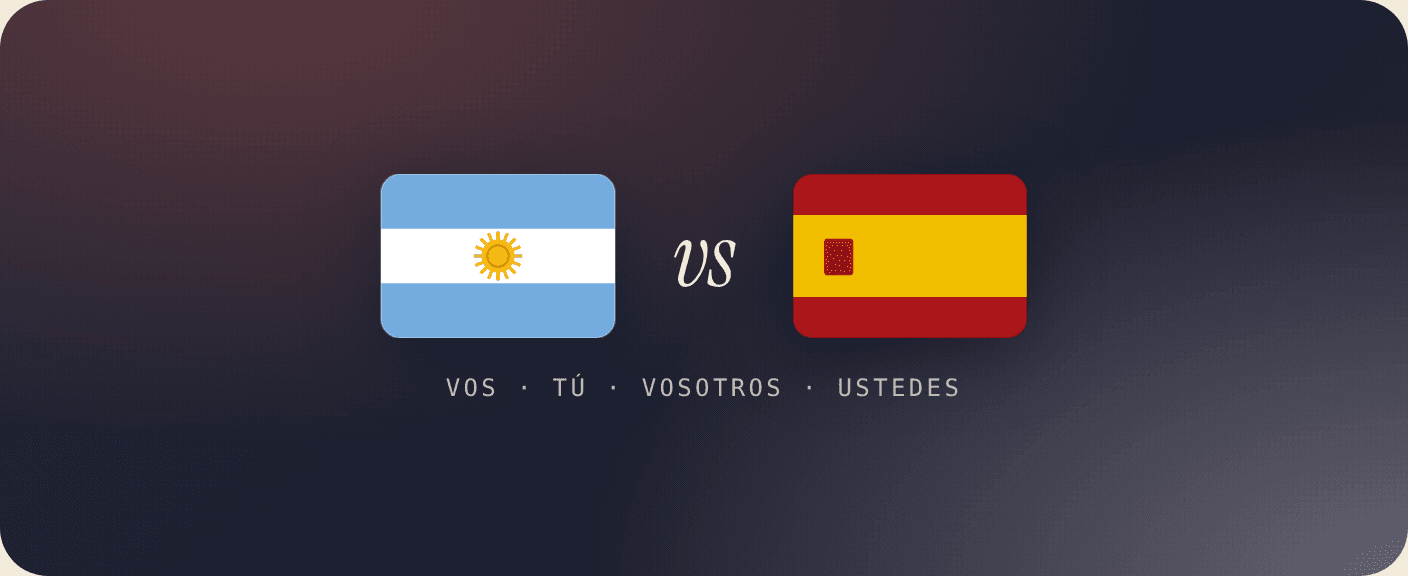
Spanish spoken in Mexico sounds different from Spanish spoken in Spain or Argentina. French in Paris sounds different from French in Quebec. Most language courses default to a single 'standard' accent, which can leave learners genuinely confused the first time they encounter the real thing.
On YouTube you can deliberately seek out content from different regions. You can subscribe to channels from Mexico City, Buenos Aires, and Madrid and let your ear adapt naturally over weeks and months. This kind of varied exposure is very difficult to replicate with textbooks alone.
Vocabulary in context, not in a list
Research consistently shows that vocabulary is retained far better when it is learned in context rather than from a translated word list. When you hear a word used naturally in a sentence, paired with emotion, gesture, and situation, it forms stronger memory traces than when you drill it in isolation.
Watching a YouTube video about Japanese street food, for example, and hearing the same five food-related words used repeatedly across ten minutes of real conversation is far more effective than memorising those same five words from a flashcard deck with no context attached.
It keeps you motivated because you actually enjoy it
One of the biggest reasons people give up on language learning is that it stops being enjoyable. Grinding through grammar exercises or repeating phrases into an app can feel like a chore after a few weeks.
YouTube solves the motivation problem by letting you learn through content you genuinely want to watch. If you love cooking, watch cooking channels in your target language. If you are into gaming, watch gaming streams. If you care about football, find football commentary. The language becomes a vehicle for getting something you already want — entertainment or information — rather than an end in itself.
This is not a small thing. Motivation is probably the single biggest predictor of long-term language learning success. Any method that keeps you engaged for months and years will beat a theoretically superior method that you quit after six weeks.
How to get the most out of YouTube for language learning
Simply pressing play and watching passively is not enough. To turn YouTube into a serious study tool, you need to engage actively with the content.
- Use subtitles strategically — start with target-language subtitles (not your native language), and only fall back when you are genuinely lost.
- Pause and repeat sentences you didn't catch rather than letting them wash over you.
- Keep a vocabulary note open and write down words and phrases that recur or that you find interesting.
- Re-watch segments to notice how pronunciation, stress, and rhythm work in natural speech.
- Gradually move toward harder content — channels aimed at native speakers rather than language learners.
The missing piece: turning passive watching into active learning
The main limitation of watching YouTube on its own is that there is no feedback loop. You can watch hundreds of hours of content and still struggle to recall vocabulary or produce the language yourself, because passive exposure alone does not cement knowledge.
This is exactly why tools like Lingooso exist. By taking a YouTube video you choose and automatically generating flashcards, vocabulary highlights, and comprehension exercises from it, Lingooso closes the loop between input and active recall — giving you the benefits of authentic content without losing the structure that makes new knowledge stick.