
The short answer
Yes — YouTube is one of the best free language-learning resources ever created, and for some parts of learning a language it genuinely beats a traditional course. But it comes with one important catch that determines whether you actually make progress or just spend hours feeling like you are.
The catch is this: YouTube is exceptional at input and useless at feedback. It floods you with authentic, level-appropriate listening material in a way no textbook can match — but on its own, it does nothing to make sure the vocabulary sticks. Understanding whether YouTube works for you comes down to whether you close that gap.
What YouTube does better than a course
The linguistic case for YouTube rests on comprehensible input — the well-supported idea that we acquire language mainly by understanding content slightly above our current level, not by memorising grammar rules. YouTube is arguably the richest source of comprehensible input in existence.
- Real, unscripted speech — filler words, slang, contractions, and regional accents that textbooks sanitise away
- Visual context — gestures, objects, and reactions that help you infer meaning even when you miss words
- Infinite range — content at every level and on every topic, in almost every language
- Motivation — you learn through videos you actually want to watch, which is the single biggest predictor of sticking with it
Where YouTube falls short
The limitations are just as real, and being honest about them is what separates learners who progress from learners who plateau while feeling busy.
There is no feedback loop. YouTube never checks whether you understood, never tests your recall, and never tells you which words you've actually retained. Passive watching builds recognition — you'll start to feel like you understand — but recognition and recall are different skills, and only recall lets you speak.
There's also no structure. A course sequences material so each lesson builds on the last. YouTube hands you an ocean and leaves you to navigate it, which is freeing for self-directed learners and paralysing for everyone else.
How to make YouTube actually work
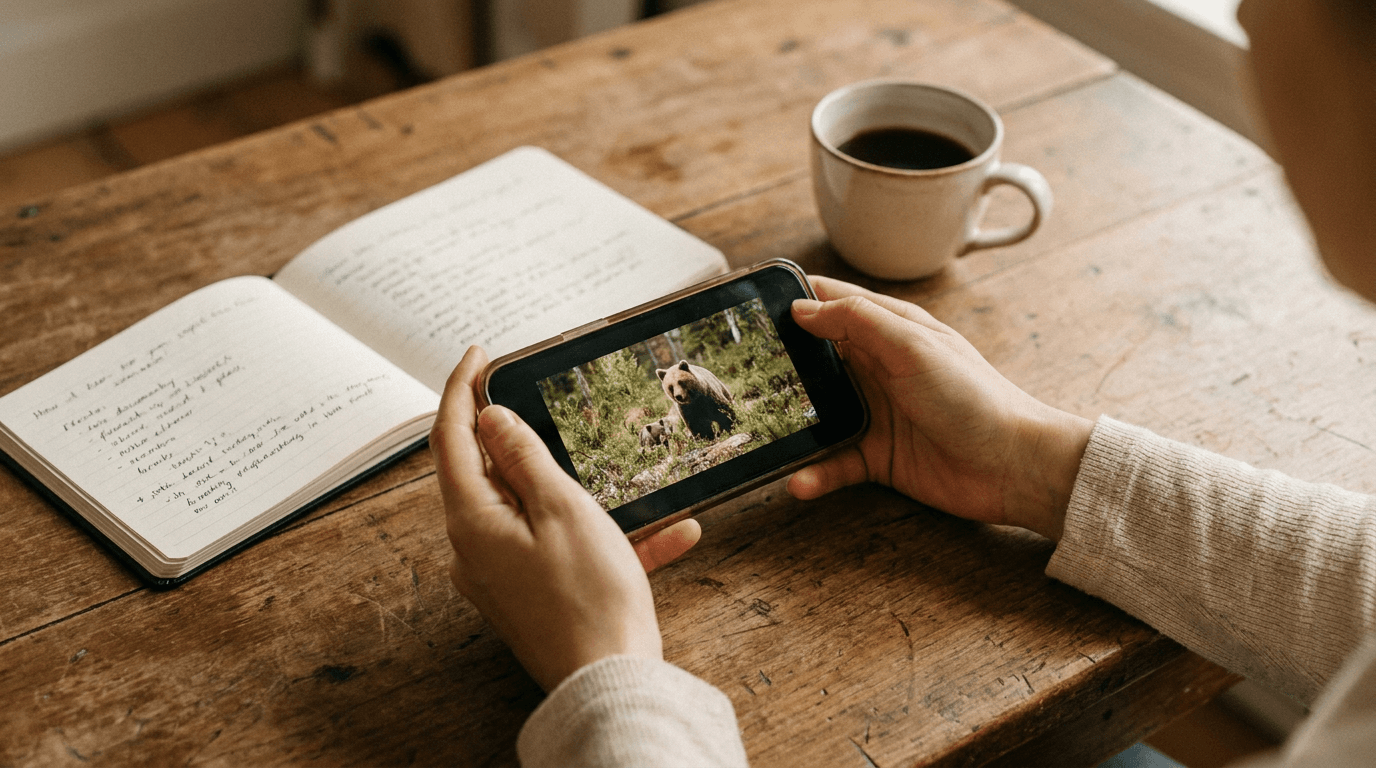
The fix is to stop watching passively and start turning videos into active study. Every method below is about converting exposure into retention.
- Use target-language subtitles, not your native language, and only fall back when you're truly lost
- Pause and repeat sentences you didn't catch instead of letting them wash past
- Capture words and phrases that recur — the act of writing them down is what starts turning exposure into memory
- Review that vocabulary with spaced repetition so it moves into long-term memory
- Re-watch — the second pass through a video reveals how much you actually absorbed
Closing the gap automatically
The manual version of this — pausing, writing down words, building flashcards, testing yourself — works, but it's tedious enough that most people quit. That friction is the real reason "just watch YouTube" so often fails.
Lingooso removes the friction. Paste any YouTube video in your target language and it automatically extracts the key vocabulary in context, builds flashcards, and generates comprehension quizzes from the actual speech in the video. You keep the thing YouTube is best at — authentic, enjoyable input — and add the feedback loop it's missing. That combination is what makes YouTube genuinely good for learning a language.